What Can a Holter Monitor Really Detect?
A Holter monitor detects intermittent heart rhythm problems by recording your heart's electrical activity continuously as you go about daily life. While a standard clinic test only captures a brief moment, this portable ECG monitor tracks every heartbeat during work, exercise and sleep. Clinicians use the recording to check for several common findings:
- Atrial fibrillation, an irregular and often rapid heartbeat that raises stroke risk
- Supraventricular tachycardia and other tachycardias, which cause episodes of a racing heart
- Bradycardia, where your heart beats slower than expected
- Heart pauses or conduction abnormalities that disrupt how electrical signals travel
- Premature beats, including early contractions felt as a skipped beat or flutter
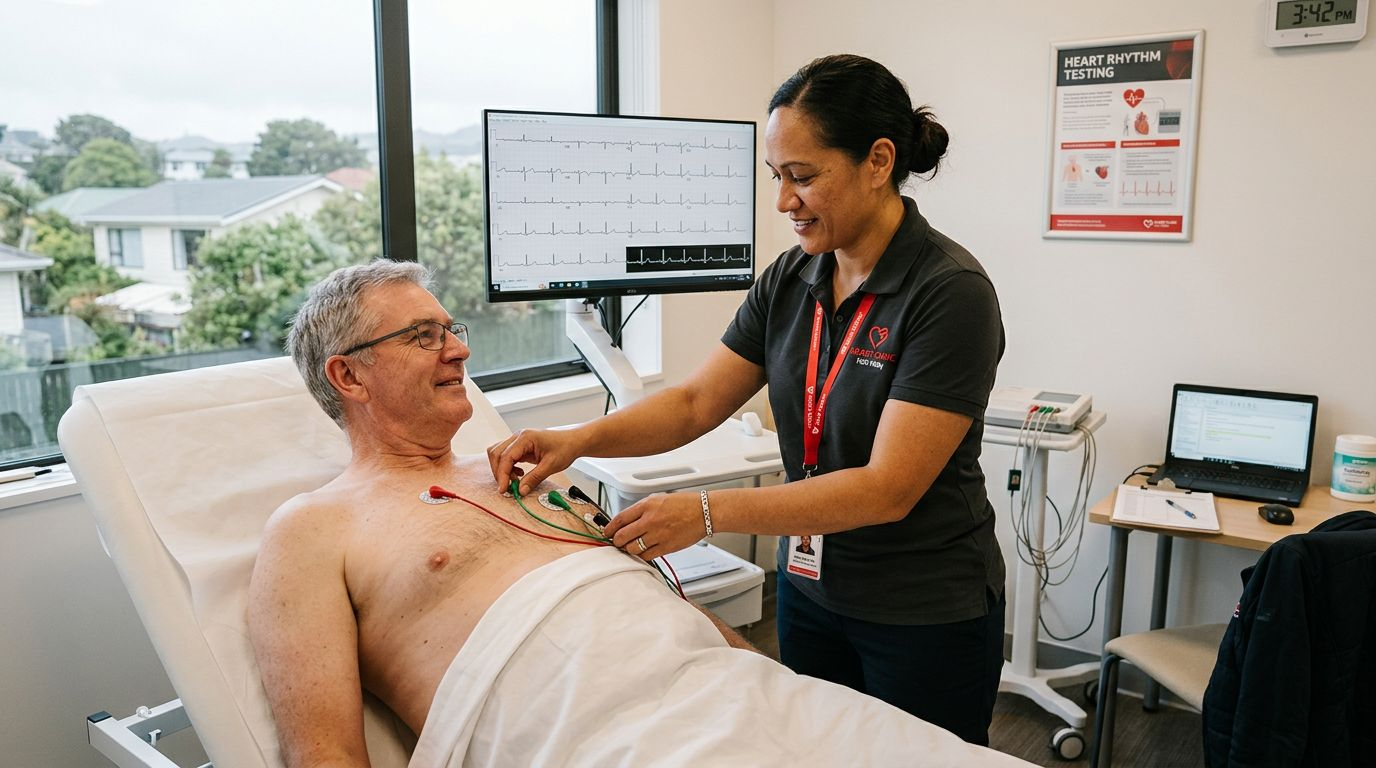
A standard 12-lead ECG at your doctor's clinic captures a brief snapshot of your cardiac rhythm. That quick check lasts around 10 seconds. When palpitations, dizziness or fainting come and go, a short clinic test often misses the event. Our ECG vs Holter monitoring guide explains how continuous recording bridges that gap across Wellington, Hutt Valley and Kapiti.
According to the Heart Foundation NZ, a Holter monitor shows your heart rate and rhythm during normal life. As Cleveland Clinic notes, common findings include atrial fibrillation, bradycardia, tachycardia and premature ventricular contractions. Those premature beats are early extra contractions from the heart's lower chambers. We've seen how helpful it is when rhythms are recorded during ordinary routines, giving patients and doctors clear direction.

How your symptom diary connects feelings to electrical activity
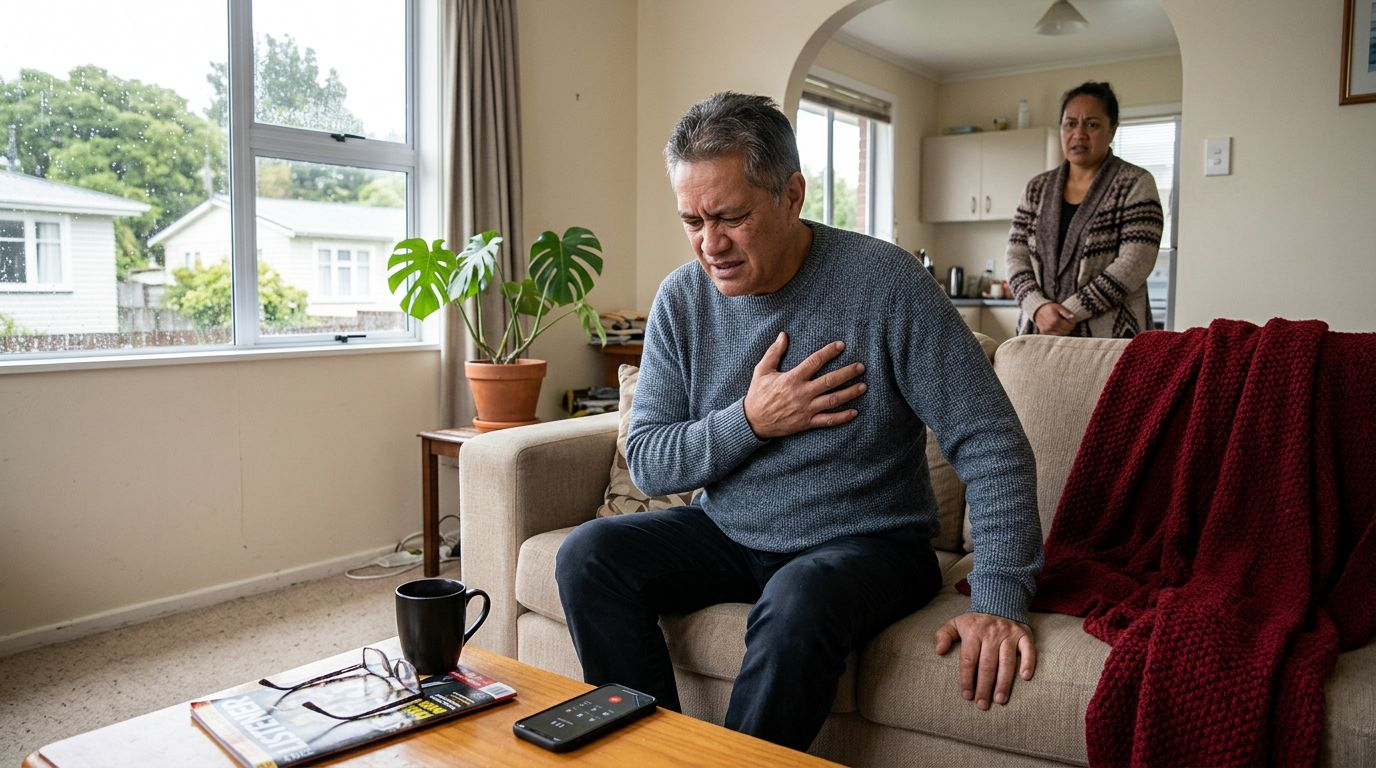
Wearing the portable recorder is only half the test, because context makes the tracing meaningful. For example, you might feel a flutter on the train to work, or wake up with a racing heart. Keeping a simple diary lets our team match your physical sensations directly to the recorded heartbeat.
Write down every symptom, the exact time it happened, and what you were doing at that moment. You should also note when you went to bed and when you woke up. Both our physiologist (a specialist cardiac technician) and reviewing cardiologist compare those diary notes against every beat on your continuous ECG.
Patients often ask us whether stress or anxiety will confuse the results. A Holter monitor measures electrical heart signals rather than diagnosing anxiety itself. If anxiety triggers heart palpitations, the monitor records those beats so a clinician can check for an arrhythmia. An arrhythmia is an abnormal heart rhythm that needs medical assessment.
Limits of Holter monitoring and what else your GP may check
Knowing what this test measures helps you set realistic expectations before you put the monitor on. A normal result means no significant heart-rhythm abnormality was identified during that specific recording period. Because intermittent arrhythmias sometimes stay quiet for days, symptoms outside that window still merit review with your GP.
Holter monitoring tracks your electrical rhythm rather than imaging your coronary arteries or checking for blockages. An ambulatory electrocardiographic clinical review states that this monitoring tracks rhythm rather than cardiac ischaemia or blood pressure. Cardiac ischaemia is reduced blood flow to the heart muscle. If your GP suspects angina (chest pain from narrowed arteries) or blockages, they may arrange echocardiography (heart ultrasound), stress testing or angiography.
Why can symptoms be missed, and does longer monitoring help?
Symptoms are missed when irregular beats stay quiet during a short window, and longer monitoring gives us more chances to catch them. Traditional Holter monitoring often lasts 24 hours, which works well for daily flutters. When dizzy spells or fainting (called syncope) happen once a week, a longer recording window helps capture them.
A single-centre prospective study of people with palpitations, chest pain or syncope found significant arrhythmias in 34.5% of participants wearing a week-long ECG patch. For patients, that higher detection rate means longer monitoring creates more opportunities to capture an intermittent event. This small study tested a specific patch device against a one-day monitor, so it serves as general evidence rather than a guaranteed diagnosis.
Because symptom timing varies, Holter monitoring at CardioLabs offers a 48-hour option for frequent symptoms. We also provide a 7-day monitor when episodes happen less often. You may wear a lightweight three-electrode device or a patch-style recorder, both comfortable, waterproof and exercise-proof. We run mobile clinics across Wellington, Hutt Valley and Kapiti without waitlists, and a courier service is available.
Common questions about at-home ECG monitoring
Can a Holter monitor detect a blocked artery?
A Holter monitor checks your heart's electrical rhythm rather than showing whether your coronary arteries are narrowed or blocked. If you experience chest tightness with exertion or suspect angina, talk to your GP so they can arrange targeted coronary-artery testing.
Can I shower and exercise while wearing the monitor?
Yes, they're completely waterproof and exercise-proof, so you can keep up your normal daily activities. Staying active helps us see how your heart rhythm responds to real-life effort, sleep and routine stress.
How quickly will my GP receive the results?
In most cases, we send a detailed report directly to your GP within 48 hours of you returning the device. Every recording undergoes onsite analysis by our physiologist and a full cardiologist review. Your doctor receives clear cardiologist-reviewed results along with practical management advice for your next steps.
Holter monitor price at CardioLabs
Knowing your testing costs upfront makes arranging heart checks simple and stress-free. CardioLabs’ current Holter monitoring fees are listed below, and each report is reviewed by a cardiologist and includes management advice for your GP. Our standard service fees are:
- 48-Hour Monitor: $440
- 7-Day Monitor: $566
- Extended-duration monitoring: custom pricing available on request
Private tests are self-funded or covered by health insurance, with payment due on your appointment day. Southern Cross and NIB members can share their membership numbers when booking for pre-approval and direct claims, though partial payment may still apply. Eftpos is preferred, while cash, credit cards (with fees applying) and post-appointment email invoices are also available. It's worth checking full payment details on our Fees and Payment page.
Ask your GP for a referral or book directly through our Holter monitoring page. Please remember that our team analyses recordings after you return the device rather than watching them live in real time. Call 111 or seek immediate medical help if you experience severe chest pain, breathing trouble or fainting. This guide offers general health information and supports, rather than replaces, tailored medical advice from your doctor.